Having arrived from Australia in early June, 2016, we stayed in London for a few days to shake off the jet lag. Our driving tour around England’s west country, parts of north Wales, the Lakes District and Yorkshire had some distinct literary and family history themes.
London
In London itself, our highlights included a tour of Lord’s Cricket Ground , the ‘Home of Cricket’, on a very cold English summer’s day, but a very enjoyable diversion, and a visit to the South Bank of the Thames included a very enjoyable couple of hours in the Tate Modern art gallery, followed by a performance of The Taming of the Shrew at Shakespeare’s Globe theatre.


At Lord’s Cricket Ground and Shakespeare’s Globe Theatre
Jenny’s fascination with her family history brought us to the beautiful church of St Martin in the Fields. Built between 1722 and 1726, it was the parish church of one branch of Jenny’s family, the Newports, over 200 years ago, and the scene of a number of family baptisms, marriages and burials. It feels quite surreal to literally stand in the footsteps of one’s ancestors.
No literary-related tour of England would be complete without a visit to the Jane Austen House Museum in the gorgeous little village of Chawton, between London and Southampton. This proved to be a wonderful stop on our journey to Southampton to join our Baltic cruise. The museum is in the house where Jane Austen lived for the last decade of her life, and where she wrote most of her famous novels. We spent a very relaxing hour looking around there, stopping for a morning coffee, and enjoying the beautiful gardens. We both love the Austen novels, especially Pride and Prejudice, and enjoyed our time poking around Chawton.

Cornwall
Returning from our Baltic cruise (see details in our separate blog post), we began what proved to be a wonderful (if somewhat rainy!) driving tour of parts of England and Wales. Our first stay, in the tiny and historic Cornwall village of Charlestown, introduced us to the beauties of this south-western county: stunning coastal scenery, quaint stone cottages, historic harbours and, in the height of summer, hordes of tourists. The Charlestown Shipwreck and Heritage Centre, a small but immensely interesting and well-presented museum, provided shelter from the rain. A privately-owned museum, it does a great job of documenting the seafaring history of Cornwall, in particular the vast number of shipwrecks that have fallen victim to the treacherous seas.


In slightly better weather, a visit to Truro included the Truro Cathedral and the rather poshly named Royal Cornwall Museum. Having visited quite a few cathedrals, we contented ourselves with admiring the exterior of this one, and devoting the bulk of our visit to the Museum. The exhibits in this building trace the history of life in Cornwall from the Paleolithic (“Old Stone Age”) period up until the present day. There was an amazing array of pottery, jewellery, tools and weapons from the early periods; a display of the many minerals mined in Cornwall and a history of Cornish mining (a very important industry here – one quip suggested that wherever you find a hole in the ground you’ll find a Cornishman digging in the bottom of it!).
Although our time in Cornwall was short, it was certainly enjoyable and prompted us to mark it down as one of the counties deserving of a return visit one day.
The Cotswolds
One of the places very definitely on Jenny’s bucket list was the area known as The Cotswolds, and our few days here didn’t disappoint. We stayed in the old market town of Chipping Campden, in the north of this designated Area of Outstanding Natural Beauty. Our accommodation was The Old Stables of a large house on the High Street, now called Dragon House, but formerly the George and Dragon Inn, dating from 1690. We spent a whole day just wandering about this incredible, beautifully preserved village.


Views of Chipping Camden
Row after row, street after street of golden stone buildings, with quaint street names such as Sheep Street, Calf’s Lane, Pear Tree Close and Back Ends, and building names such as The Old School House, Green Dragon, Eight Bells and Barley Mow. Highlights were St James Church with its graveyard reaching back to the middle ages; the stone Market Hall in the main street, dated 1627; the alms houses, built for the poor in 1612 and still used today to house the elderly; and the contemporary Court Barn Museum. This museum contains beautiful examples of local crafts and design, and is a reminder that the Cotswolds has an enviable reputation for the quality of its artists, artisans and craftsmen.
From here, we took a day trip to Stratford-upon-Avon to visit the birthplace and childhood home of William Shakespeare. The Shakespeare Birthplace Trust manages a series of properties related to Shakespeare in some way (some more tenuously than others!). First, we visited the house where he was born and lived until his success as an actor and playwright in London enabled him to buy a larger home. The house belonged to Shakespeare’s father, who made and sold leather gloves, and his workshop in the house has been recreated. After his father’s death, Will inherited the house, but subsequently sold it and it became an inn. In 1846, P. T. Barnum of circus fame wanted to buy the house and transport it piece by piece to America as a tourist attraction, so Charles Dickens led a fundraising effort that saw the house purchased and restored by the Shakespeare Birthplace Trust. It has been a mecca for literary and theatre enthusiasts ever since!


Views of Stratford-upon-Avon
Following this, we walked through the (cobbled, of course) streets of Stratford to Harvard House, which was built in 1596 by Thomas Rogers, whose grandson later became one of the major benefactors of Harvard University. The house retains many of its original features, including its elaborate timber façade.
Our final stop on the Shakespeare trail was Anne Hathaway’s Cottage. This ‘chocolate box’ thatched cottage stands in 6 acres of cottage gardens, orchard and woodland. As we ducked our heads to enter the very low doorway a guide greeted us with “Welcome to Anne Hathaway’s Tudor cottage – except it isn’t Tudor, it isn’t a cottage, and Anne Hathaway never owned it!” In fact, the ‘cottage’ was built earlier than Tudor times, was originally just a hall, and was owned by Anne Hathaway’s father. However, William Shakespeare courted Anne here before they married in 1582.
North Wales
With a nod to Steve’s family heritage, we headed west from Chipping Campden to the village of Langollen in North Wales. Our main reason for visiting this part of the world was, once again, family history. Steve’s grandmother, Gladys Nixon (nee Gladys Jones) was born in Ruabon in Wales before the family relocated to near Manchester, England. Although Gladys only lived in Wales for a few years in her childhood, she very much considered herself to be Welsh, and was proud of her Welsh roots. Gladys’ maternal grandmother was born in Llangollen, her grandfather came from Bersham, and her paternal family all came from the nearby villages of Penycae and Ruabon. It was lovely to see this area for the first time and to reflect upon one’s roots.

A memorable feature of our time here came on our last night, when Wales, playing for the first time in the Euro 16 soccer tournament, reached the quarter finals by defeating Northern Ireland! There was plenty of joy and singing in the streets for quite some time after the match had finished, and we can definitely verify that the Welsh reputation for great singing does NOT extend to soccer fans!
The Lakes District
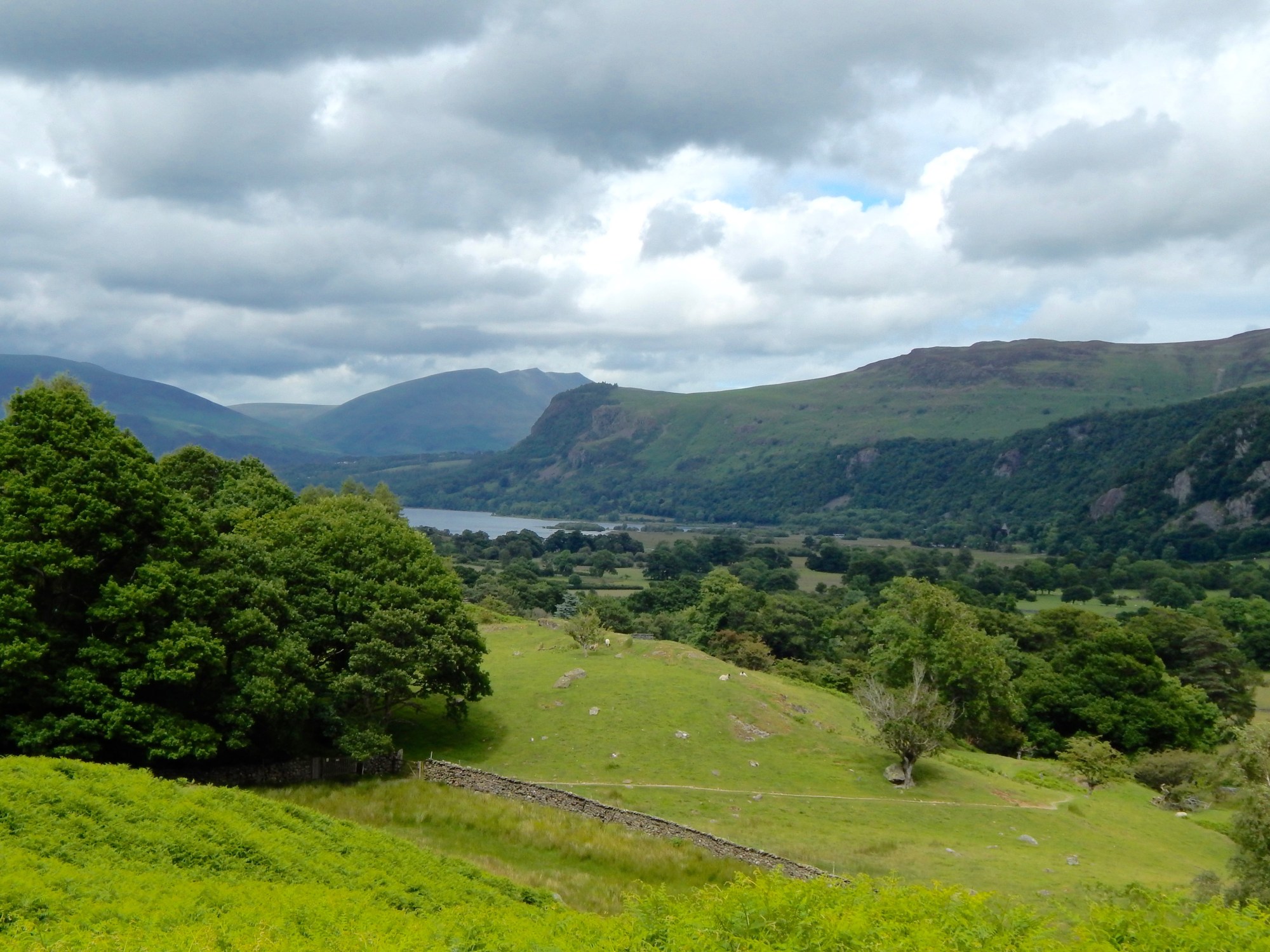
The Lakes District is beautiful and serene country – the country of writers, poets and artists, who lived in, and were inspired by, the Lakes, the spectacular mountains and hills around them, and the lovely, rustic villages nestled in between. We drove the narrow, winding road that links the Lakes through villages such as Kendal, Ings, Windermere, Ambleside, Grasmere and Castlerigg, finally to arrive at our accommodation, a hotel in the tiny village of Grange-in-Borrowdale, just outside of Keswick.


At Grasmere we stopped off at the Wordsworth museum (of course!) – the house which William Wordsworth found when he wanted to escape the bustle of London and live a simpler life. We were lucky enough to be part of a small group who received a tour from a delightful young woman, clearly a Wordsworth scholar, who made the house, the Wordsworth family, and times past come alive for us.
On to our hotel at Grange for a three night stay. A beautifully located hotel, just out of the village, set in an ancient glacial valley, looking up at the brooding surrounding fells (hills), and out towards stone-walled, startlingly green paddocks of grazing white sheep with black faces, black sheep with white faces, and white faced sheep with black ears. Other treats – foraging bunnies on the hotel lawn in the early morning mist; so many different types of small birds; and even a wild, beautifully coloured pheasant foraging in the hotel garden. The food at the hotel was simply beautiful, the best we have had anywhere, and the service was first class. Jenny wanted to take the chef home, but was firmly told that others had unsuccessfully made this request before her! C’est la vie.


Walking the Fells in the Lakes District
Although it rained for much of our time at Grange-in-Borrowdale, we did manage to get in one lovely country walk, through various fields and sedgeways, over the river Derwent where we saw an amazing flotilla (the only word to describe this flock) of geese meandering upstream, alongside the lake, and taking in a vast array of plants and trees, including many fine old oak trees. The walk was calm, peaceful, relaxing, sustaining. This is one of the things that attracts people to the Lakes District – the opportunity for relaxation, solitude and reflection.
Haworth and the Yorkshire Moors
The village of Haworth (pronounced Howarth), in Yorkshire, had two claims upon our interest. First, it was the home of the Bronte sisters, Charlotte, Emily and Anne, and now proudly boasts the Bronte Parsonage Museum. Secondly, it was the ancestral home of yet more of Jenny’s ancestors.
Set on the hills of both sides of a steep river valley, the village has many old stone weavers’ cottages lining the cobbled main street. The street is incredibly steep and narrow, so it’s hard to believe it hosted a Stage of the Tour de France a couple of years ago! Near the top of the hill sits the church of St Michael and All Angels where Jenny’s five times great grandparents, John Sunderland and Rebecca Brooke, married in 1747 (we actually visited the church on the 269thanniversary!). They, along with many other members of the family, are buried in the churchyard there, although it would be impossible to find their actual graves given the sheer numbers of headstones and the passage of time.


It was to this church that the father of the Bronte sisters, the Rev. Patrick Bronte, was appointed as Curate in 1820. The Bronte Parsonage Museum, is now dedicated to the lives and works of all the Brontes, including their brother Branwell, a poet and artist. All of the Bronte sisters’ novels (including Jane Eyre, Wuthering Heights, The Tenant of Wildfell Halland Agnes Grey) were written here, and we saw poignant remnants of the sisters’ lives and work.
Leaving Haworth, we began our long drive across the Yorkshire Moors. The moors are huge tracts of open, bare windswept hills and valleys, interspersed with the occasional village and town built from rough-cut local stone. The roads are narrow and winding, but the views are fabulous, especially as when we drove through there were rainclouds in abundance, making the sky suitably grey and foreboding. The moors contained the odd farmhouse or flock of sheep, but were generally wild, unfenced and unpopulated.
‘Pemberley’ and the Peak District
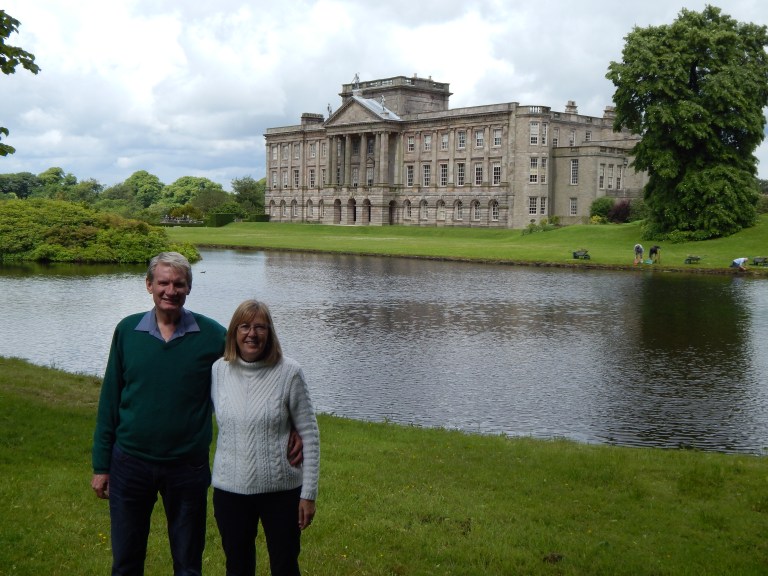
Being die-hard Jane Austen fans, we could not pass up the opportunity to visit Lyme Park, which featured as Mr Darcy’s ‘fine estate’ of Pemberley in the renowned BBC mini-series production of Pride and Prejudice. Although the interiors of Lyme Park were not used in the production, the exterior and gardens are still very recognisable. We spent a relaxing hour wandering the grounds, half-expecting to see Mr Darcy himself come round a bend in the path. The history of the estate is quite fascinating, having been in the one family for almost 600 years, and a tour of the interior of the house and some of its treasures proved far more interesting than we had anticipated.
From Lyme Park we drove through the stunning landscapes of the Peak District to the little village of Over Haddon, near Bakewell. Somewhat neglected by tourists (but popular with walkers), Over Haddon was a delightful place to spend a restful few days, once again dampened by constant rain. A shopping trip into Bakewell, choked with cars, buses and tourists, made us really appreciate the tranquillity of Over Haddon.


Portsmouth
Prior to embarking on our cruise around Ireland and Scotland (see our separate blog post), we stayed overnight in Portsmouth to visit the Portsmouth Historic Dockyard. This is the home of the National Museum of the Royal Navy of Great Britain, as well as the final resting place of a number of famous British naval vessels: the Mary Rose, commissioned by Henry VIII and launched in 1511; Admiral Horatio Nelson’s flagship, the HMS Victory in which Nelson was famously killed in 1805 during the Battle of Trafalgar; and the HMS Warrior, built between 1860 and 1865 – the first steel hulled warship to be constructed, and the largest naval vessel of its time (and with an amazingly impressive scale even today).


The Mary Rose sank in 1545 in mysterious circumstances during an encounter with the French, and lay undiscovered until 1971. Raised in 1982, she now undergoes constant restoration and unfortunately was closed at the time we attended. The HMS Victory and the HMS Warrior, on the other hand, are completely on display and able to be boarded and toured. Not really maritime buffs, we were pleasantly surprised at how much we enjoyed our time on each of these ships.
Salisbury and Windsor
As the final leg of our UK experience we disembarked from the Caribbean Princess at Southampton with a minimum of fuss, and having cleared the terminal met up with our driver, David, who was to drive us up to Windsor. He was kind enough to drive us through the New Forest, a unique and exclusive (and therefore very expensive!) heritage area in England, full of small, old villages, huge trees and freely-roaming animals. This drive, and this area, was simply beautiful. It turns out that warm, fine weather had finally come to Britain – two days before we were due to leave! This particular day was a top of 34 degrees – the hottest day of the year so far here, and a very warm day all round for Britons.
Salisbury
Our schedule for our final two days in the UK was to drive to Windsor, which is near Heathrow airport (our departure point for home) and stay there for two nights to see Windsor and Windsor Castle. On the way, we stopped at Salisbury– a must see stop for Jenny, as Salisbury Cathedral has the best conserved original copy of the Magna Cartain existence.
The town of Salisbury is situated on the eastern edge of the wild, sparsely populated region that encompasses Stonehenge. We have seen many churches and cathedrals on this trip, but Salisbury Cathedral was simply amazing. It was built in the 1300s in just 38 years, and for most of its life has had the tallest cathedral spire in Britain. Inside, it is simply enormous – it must be literally 100 metres long, and comprises cavernous spaces inside, created by its great length, width and height. One amazing artefact we saw was an ‘honour board’ in which the name of every Dean of the Cathedral is listed, beginning from the first Dean appointed in the 9thcentury – every one. And there, last on the list, was the name of the current Dean – a woman, the first in the 1,000 year history of this church. How momentous (and about time!)


The original Magna Cart adocument (one of only 4 surviving originals) is very carefully displayed in the Cathedral’s Chapter House and is in extraordinary condition. As one looks at it, it is amazing the think that this was written in 1215, and was essentially the first statement of democratic principle in the modern world. We really enjoyed seeing this. We also enjoyed walking across the road from the Cathedral to access the Salisbury Museum. This contained an excellent array of artefacts from 500,000 BC, including Neanderthal stone tools, jewellery and some small hoards of Celtic treasure. Its most stunning displays on our visit were actual skeletons, uncovered in locally situated burial mounds, found in Beaker burial sites from around 5,000 years ago. These were presented in the same form as they were discovered, and were simply extraordinary and so thought-provoking.
Our final stop just outside of Salisbury was the ruin of Old Sarum, the site of the first Salisbury cathedral and a huge former castle built for King John (of Robin Hood and the Crusades fame) in the 1300s, set high up on a hill with commanding views of the surrounding countryside. Unfortunately, the castle is derelict now as it was systematically demolished during the 1500s, and its useable stone deployed to other building works in the area. We didn’t spend long here, but it was easy to imagine the scale and grandeur of this once magnificent complex, and the medieval village society that existed around the castle.
Windsor and Windsor Castle
Windsor is a pretty medium-sized village just outside of London, and the home of one of the Queen’s cherished homes, Windsor Castle. It turns out that the Castle is very popular with crowds, and though we went at an ‘off peak’ time, it was still an arm wrestle. A very fine set of buildings indeed, with magnificent gardens, especially in the old moat area. Highlights? In the State Apartments, a fascinating room depicting the royal family’s relationship with William Shakespeare and his plays over the centuries; rooms featuring much art work including a number of Rubens and Van Dykes; all the usual magnificent room decorations, fittings, furniture and chandeliers, and the size and scale of the castle itself. No indoor photos allowed by Her Majesty, which cramped Jenny’s style a little.


Highlights in Saint George’s Chapel, (where in 2018 Prince Harry married Meghan) – the major church within the castle grounds, were: the scale and height of the slender and classical vaulted ceilings, but mostly, seeing the graves of the royal personages now interred there, including Edward IV (1461-83);Henry VI; Henry VIII (1509-47) and his 3rd wife, Jane Seymour (she died of natural causes); Charles I (the only English monarch to be executed, in 1649); and George VI and Queen Elizabeth the Queen Mother (the current Queen Elizabeth’s parents, who are buried together despite dying 50 years apart). Many of these are interred in chambers below the floor, so as you walk around, you are literally walking on history!
A minor but worthwhile feature was seeing the Royal Guards brook no idiocy from the crowds. Marching through the grounds to change guard, one guard bellowed, scarily-loud, “Make Way for the Queen’s Guard!!” as they marched at full speed, sending tourists scurrying out of their way. Later, a boy of about 14 (who should have known better – so should have his parents) went behind the rope protecting a guard on duty. The Guard immediately took one step toward him, rifle and front leg slanted forward, and bellowed “Step Back!” at him. It was good to see the teenager learning a little lesson in civility and respect as he hurriedly retreated.
The following day we flew home to Australia after a long time away. And that was how we completed our driving tours of England’s western country, and Wales. We hope you have enjoyed!
 Adventures for Two