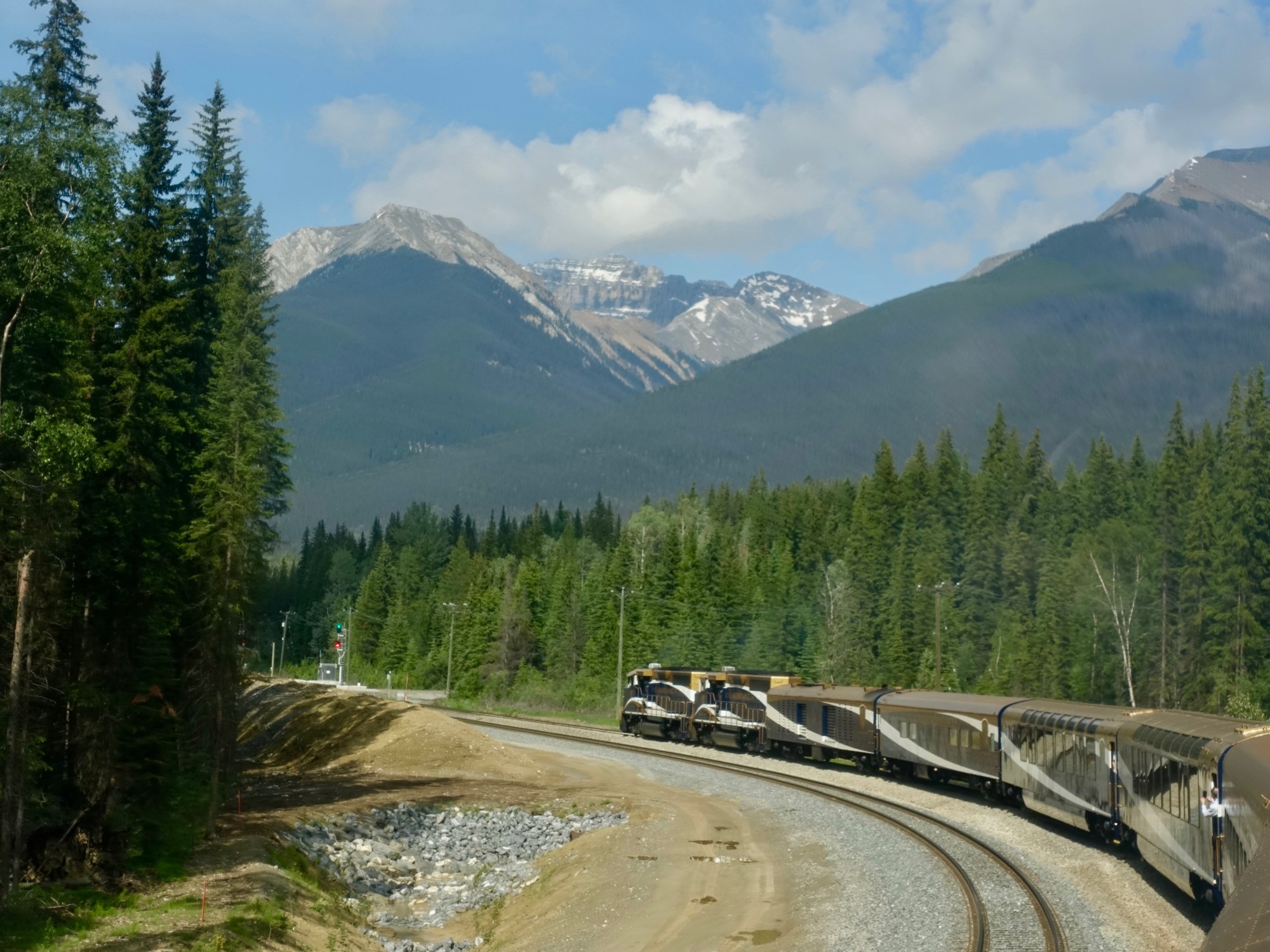
We have been having a great time on this trip, which we began on June 16th, 2018. Getting to Vancouver involved a 12 hour flight from Brisbane to LA on Qantas, a 5 hour layover at LA awaiting a connecting flight to Vancouver, and a further two and a half hour flight up to Vancouver (there are direct flights from Brisbane to Vancouver, but we had had to re-design our travel plans at one point). We saw the sights in Vancouver for four days before joining an APT tour which takes in, in its initial leg, a wonderful train journey on the world-famous Rocky Mountaineerrailroad from Vancouver to Banff. While all this was going on, Steve has had to try to keep abreast (successfully, as it turns out) of how the Socceroos are doing in the World Cup (doing ok so far), the NSW Blues in the State of Origin Rugby League (series win!!), and Australia in the One Day International Cricket Series against England (a disaster).
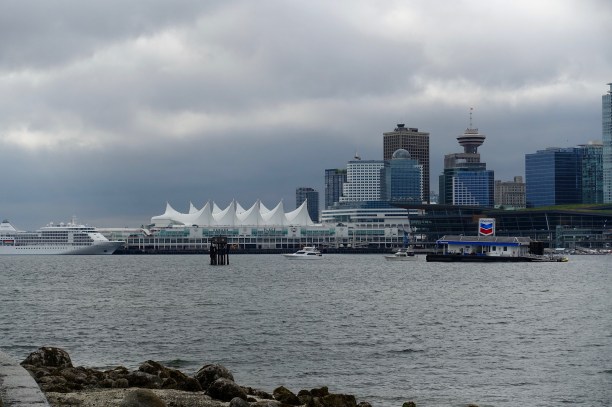
Vancouver
Vancouver is often nominated amongst the top five ‘liveable cities’ in the world, and we found it a pretty city, bounded by coastal mountains to its east, some still snow-capped at the time we visited, and the huge working harbour and ocean to the west. We spent quite a few hours walking along the pedestrian pathways along the water, and twice walked to Stanley Park, the huge, 1,000 acre parkland which sits on the harbour in the middle of the city. This is a beautiful area, quite wild in parts with huge redwoods and other thickly-growing trees, and has been a park since the 1870s. It is very peaceful to walk on the trails through the park where we saw squirrels and a raccoon, and visited the renowned Vancouver Aquarium which sits on the Park’s edge (it contained some wonderful exhibitions including a jellyfish array, local marine life, endangered African penguins and the ‘Vortex’ exhibition highlighting the disastrous effects of plastics on the marine ecosystem). The city itself was busy but peaceful and friendly, and we had an enjoyable time there, not least in watching the many sea planes constantly taking off and landing in Burrard Inlet.


Views of Beautiful Vancouver
Another highlight for us in Vancouver was our visit to two art galleries, the Vancouver Art Gallery and the Bill Reid Gallery. The former contained some wonderful photographic exhibitions featuring the works of two pioneering women from the late 1800s which documented the nature of frontier life of the time, the resilience and determination of the pioneers, and their love of and relationship with nature. We both really enjoyed this. The second gallery, the Bill Reid Gallery of Northwest Coast Art, showcased some works by the renowned and pioneering first nations artist Bill Reid, who died in 1998 having influenced a new generation, as well as works from more contemporary first nations artists. This featured a series of photographs on the importance of the ancient first nations practice of body-tattooing for young first nations people today, and its resurgence in contemporary first nations culture. Some of Bill Reid’s fantastic sculptures are showcased in public places around Vancouver, including the Airport and the Aquarium.


The Rocky Mountaineer
The Rocky Mountaineer is now recognised as one of the great train journeys of the world, and it is something we have wanted to do for a long time. We took the ‘First Passage to the West’ journey, which covers two full days and begins in Vancouver, British Columbiaand terminates in Banff, Alberta, in the beautiful Rocky Mountains. You might think that two long days aboard a train would be tedious and tiring, but we found it incredible! It is not cheap, but is well worth the expense, with all meals and beverages catered for, very comfortable and spacious seating, amazing and helpful staff, and a domed perspex roof to our Gold Leaf carriage which enabled the best capture of the stupendous views on offer.


Views in the Columbia Ranges
The rail line generally follows the river valleys, and so for most of the trip you are surrounded by broad rivers, beautiful lakes, fast-flowing and sometimes turbulent, rapid-strewn streams , beautiful agricultural lands, and towering hills, mountains and cliffs on all sides. The views all the way were simply amazing. They began with the coastal agricultural plains which very quickly transitioned into high hills and mountains of the coastal ranges, that mountain range bordering to the east of Vancouver. The passage continues through a section of arid and scrubby territory affected by a rain-shadowed climate, where rivers and rainfall have carved extraordinary canyons and bizarre shapes into the river shorelines and plains. Further west again, we ride through rich farm lands before one rises into the Columbia Mountain Range with what seems, to we Australians, to be huge mountain peaks, densely forested and soaring to the sky.
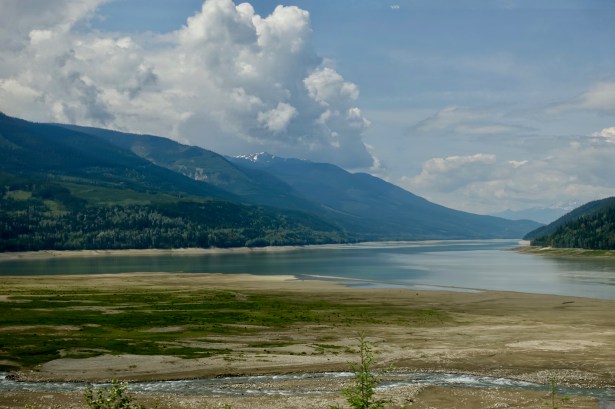
In amongst all of this we met some great people over the breakfasts and lunches on offer each day. Because this was an APT tour the majority of people in our carriage were Australian, for some reason many were from Queensland. At the end of the first day we all disembarked from the train and were accommodated in the town of Kamloops.


Just when we thought we had seen all of the high mountains the staff, on the second day, informed us that we were travelling along a valley which was a huge fault line (the same fault line as the San Andreas Fault down in San Francisco), which lay between the Columbia and Rocky mountain ranges. We were not yet in the Rockies! When we were in the Rockies, we could certainly see the difference. For quite a while, the tracks followed the course of the Kicking Horse River, and we all shook our heads at the bravery (or stupidity) of the White Water Rafters who braved its very turbulent waters. The mountains here were even more huge in scale, their peaks and slopes and waterfalls more crazily plunging, snow-covered despite the summer temperatures, and intimidating. The chasms and bridges were higher, the streams rushing more violently with the runoff from the snows. Our train passed through the Spiral Tunnels, climbing ever higher until we reached Lake Louise and then, eventually, Banff. Words don’t really capture the sights on offer. Perhaps the photographs we took will, although it isn’t easy to capture great photographs from a moving train!

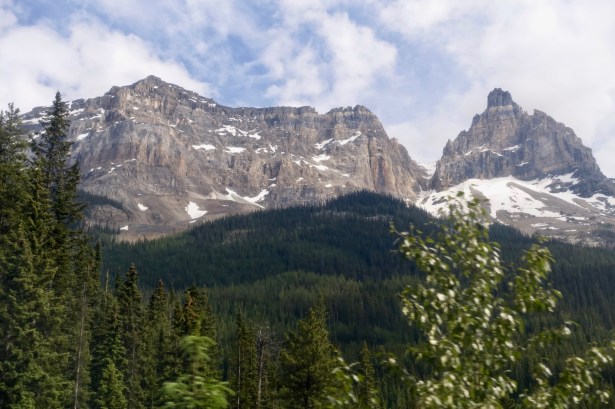
The Rocky Mountains in Summer
And so it was, late on the second day of this wonderful train journey, we pulled into Banff, to spend two nights in the incredible Fairmont Banff Springs Hotel, known as the castle in the Rockies, and probably the most iconic and historic feature of this dynamic town. But that is another story.
 Adventures for Two